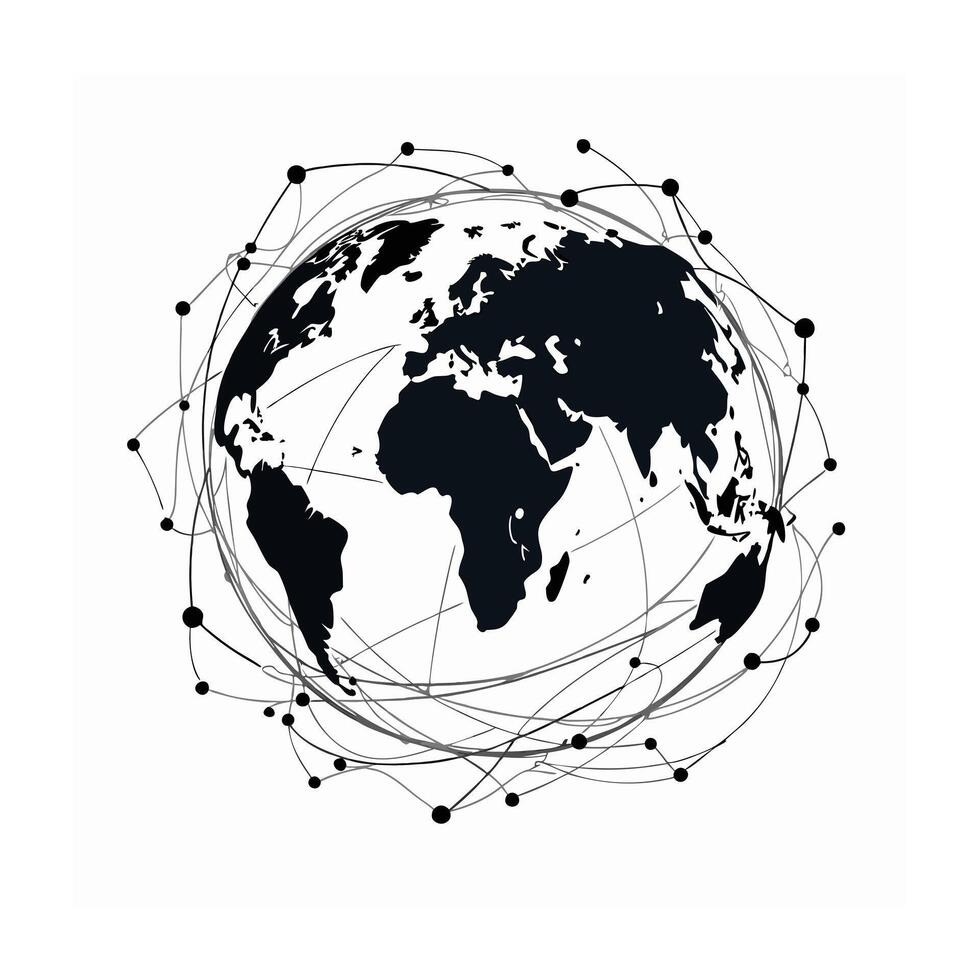
How Nodes Can Fix Broken Networks
A mission statement of sorts from a humble node in an exceedingly vast network

We are all a part of a number of networks, and this has been true since we were hunting in tribes. It could be your family, your church, your basketball team, your country or your book club. Some may be more important to you than others, but these networks greatly impact our lives. Now, it feels as if our networks are failing. Social media networks, news networks, but a lot of other networks as well. We should try to fix that.
Every network is composed of nodes. Nodes are all of us. Individuals who contribute to the strength, security and quality of the network. Without helpful nodes, the network withers. An individual’s impact is difficult to measure, but it’s there. The network is stronger when nodes are aligned and weaker when the nodes splinter or harm each other.
So why does it seem like our networks aren’t so healthy? I have a few theories:
Networks are expanding much too quickly for the average node to comprehend
Nodes would rather leave a network than fix it
Nodes are failing to grasp the level of agency they can enact upon the network
Technology has flattened the small and mid-size networks that would typically teach us how to be good nodes
The network size problem
While networks have always existed, it is new to see centralized networks the size of Facebook, X or Reddit. Many of us find it easier to thrive in smaller networks, and we have some tools in our DNA that speak to that. What the Internet has enabled is something entirely new.
Perhaps the last time this happened was when the Gutenberg press was invented in the 1440’s. Networks expanded due to the creation of mass market printed materials, and a whole new bunch of nodes came online, one in particular by the name of Martin Luther. His works were so turbulent that Europe would eventually explode in conflicts known as the Thirty Years’ War, which remade the continent. Let me tell you, Martin Luther was an impactful node.
But even that network expansion, which ended in so much violence and turmoil, is dwarfed by the expanding networks we have now. On the political side, we have BRICS, NATO and the UN, along with powerful nation states such as the US and China. Layered above those, our media and financial networks are massive, diverse, increasingly consequential and easily manipulated. Many nodes, myself included, don’t know how to act in networks such as this.
The node connection problem
What if the Loneliness Epidemic is a network problem? Loneliness is a sign of someone that either lacks a strong network, or doesn’t know how to participate in the networks that surround them. We’ve been experiencing this trend since COVID, and are just now beginning to find the language to describe it.
As we’ve adapted to more powerful forms of technology that bring a larger amount of people together, we have lost touch with the mid-size networks that taught us how to actually be part of something. Bowling leagues, churches, and social clubs have all deteriorated, despite being exposed to technology that should enhance their connectivity. Heck, even remote work is a trend that decreases connectivity. As nice as it has been to work from home, I can testify that an office community can be a welcome thing.
Technology has gotten better, but connections have gotten worse. In part because technology has also made it easy for us to form splintered and narrow networks. Niche fan group communities, obscure hobby forums, secret group chats, all of them formed by people who didn’t feel comfortable participating in a larger network.
The problem is that these Internet networks can easily become echo chambers, and they create a shocking amount of fragility. Nodes should be contributing to networks of all sizes, not just the safe or convenient ones. We can’t isolate ourselves, exclude others and improve the world at the same time.
The agency problem
Networks can be noisy, and sometimes, they take on a life of their own. For an individual node, that can have a dampening effect. Average people eventually lose faith that they can play an active role in the network.
When networks are filled with nodes who no longer attempt to influence the network, the network weakens. Often, this leads the network to be dominated by a small group of nodes that don’t represent the entire group well. Sounds a bit like Twitter to me.
Social media networks are a particularly vexing issue, because they are dominated by illusions. These illusions are created by misaligned incentives between nodes and the network owners. Millions of us contribute to these networks freely, motivated by an effort to connect with others, but some have learned how to monetize their contributions by being more ‘engaging’ than others.
You see this today in the form of social media influencers, who have so well optimized for attention that they now dominate what most people see on social media. What started as a way to keep in touch with classmates and family became a path for entrepreneurs, celebrities and politicians to increase their wealth and status. Combine this trend with corporations that optimize for engagement, you end up with a funhouse mirror, instead of a network that accurately reflects all of the contributing nodes.
So what can we do? Enact authenticity upon the network
These issues explain why I’ve spent most of my life as an internet lurker. I curate my algorithm, the people I follow, and have made an effort to avoid participating in these engagement games. Lately, I am doing things differently because I noticed that I am not seeing as many nuanced conversations as I once enjoyed. In fact, things are going in the opposite direction.
By adding my voice to the network, I hope to remedy this in a small way, and encourage others to see another path. We don’t have to be constantly trying to win a conversation, a debate or a news event. We can avoid slipping into conversations filled with convenient opinions, moral righteousness, or emotional thinking. Maybe this is a token gesture from one node, but if enough nodes act upon a network in a similar way, things begin to shift.
We applaud high agency characters in books and films, perhaps because they can influence their network in ways that we feel that we can’t. But those stories teach us that it’s important to try. The alternative only creates a mixture of ignorance and apathy.
No matter what your ambitions are, everything depends on your ability to influence the network. Want to get famous? Build your network. Want to save the environment? Realign the network. Want to be a better friend? You guessed it.
This post is my first attempt at contributing to a vast network that I have been part of for most of my life. I hope it will be beneficial when it’s all said and done. My guiding principles:
Open the aperture to gain perspective
The world is a vast place, and the more we explore it, the more we are able to connect disparate ideas, strengthen our bond with others and change our mind based on new information. We should widen the frame to gain a three-dimensional view of the world and determine what we really think.
Empower personal curiosity
We are often told to specialize and conform to make life easier, but along the way, many of us have lost the ability to listen to our gut and chase unique ideas. We should reject herd-like thinking and follow whatever inspires individual curiosity, even if it leads down some strange paths.
Be skeptical of certainty
Overconfidence in our opinions often ends conversations, and instead, we should be hoping to start them. Reaching consensus is not easy, especially when one group thinks their way is right beyond all shadow of a doubt. We almost always act on incomplete information, so skepticism is a valuable tool.
Search for agreement, not disqualification
Building a better society will always require the integration of people you initially disagreed with. We are running out of time to come together on a slew of issues, and disqualifying people or ignoring them has proven to be boring and ineffective. I want to focus more on what unites us and celebrate diversity of thought to get us moving in a positive direction.
It won’t be easy to make these principles more popular than they are today. For a multitude of reasons, we are swimming upstream. Let’s get started.