A Night in Mendocino
At least the cliffs were free.

To reclaim what would otherwise be lost forever is a noble pursuit.
We rolled into Mendocino, California on a cloudy May afternoon. We knew little of what to expect, other than it being one of the most highly considered stops for anyone driving south along the famous Highway 1. We had been struggling through a treacherous drive along what is aptly called the Lost Coast for most of the day. Even the roads were exhausted by the isolation and erosion, with multiple construction projects impeding our progress. The journey drained us, and we were desperate for a beacon of respite when we rolled into Mendocino.
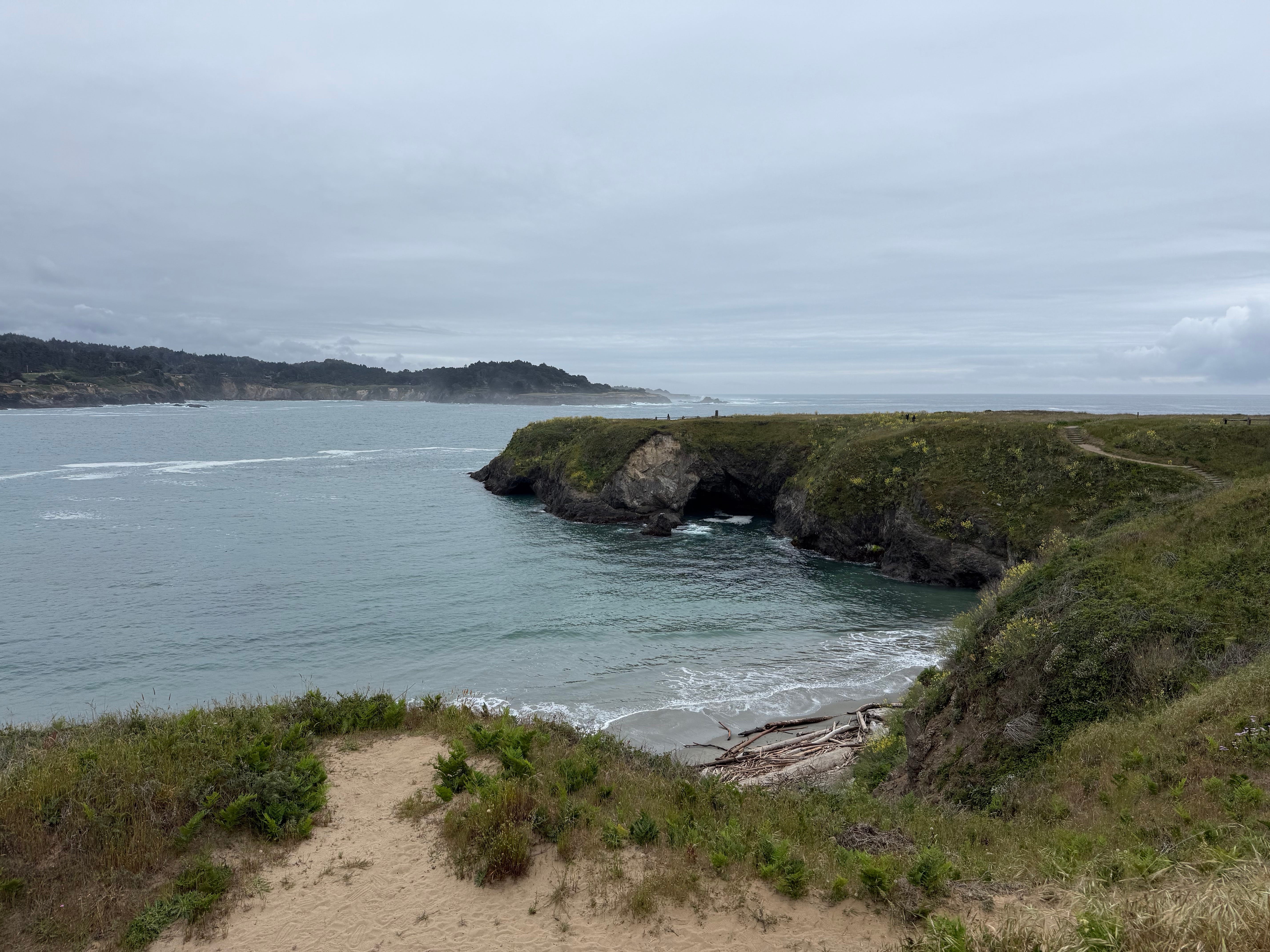
The village is tucked between the highway and a series of stark cliffs that lead directly into the Pacific Ocean. The surrounding land was just as devoid of trees as you would expect of a former logging area, which chopped and sold most of its nearby bounty to the larger developments in the San Francisco Bay since the town’s founding in the mid-1800s. The extraction was noticeable for us given where we were coming from. A few days in our home state of Oregon and Redwood National Park, the coasts of which remained filled with the toughest of trees, capable of braving the region’s stony cliffs and strong winds. We hiked among them with joy. Here, most of that was gone. What stood in its place was a modest gathering of buildings, no more than a mile across, many of them still looked to be from the logging era that collapsed in the 1930s.
It felt miraculous that artists from the Bay Area discovered this village and reclaimed it as an enclave about 50 years ago. Those hands were ready for the work and they didn’t mind the dust. The land must have been cheap, but for good reason. The buildings looked as if a strong gust or a great wave would take them into the sea at any moment. Nothing about the village felt permanent, but in that precariousness, something beautiful came into shape. Artists came, craftsmen came, and they built something miraculous. Many of those artistic pioneers still live there today, boasting white hair, walking sticks and wrinkled skin. They tended beautiful gardens and fostered a wonderful community along these inhospitable cliffs.
It brings me little joy to say that their creation can now be looked at today by an outsider as an overpriced paradise for yuppies.
Before I get into my salacious point, it’s worth noting that many of the original artists who re-founded the city in the 50s and 60s were by no means destitute. Back then, you had to have some degree of privilege to feed yourself as an artist, let alone seek abandoned towns far from the opportunities of the city. You had to be crazy and funded enough to leave steady work, city services and community that had been built up over decades. It was a brave thing to do, but nobody who worried about their next meal would choose such a foolish pursuit. They were noble artists and stewards of an all-important counterculture, but they too were enabled by the excesses and growth of American industry. We all are, even today.
After paying $25 for a personal pizza, the thought occurred to me that this town was now peddling itself for people of means and status, of which I was not. Art galleries, design studios and boutique hotels littered the narrow streets. Fashionable young people parked their Teslas and Audis along the alleyways, leaving barely enough room for us to creep by. My Levi jeans and thrifted flannel felt increasingly out of place among the well-dressed visitors. The restaurants were mostly available by reservation only, leaving us with the consolation of enjoying our expensive takeout in a garden-based pop up. The outward-facing beauty of the town was there for me to see, but I would see little else during my time here. The parking was free, access to the cliffs were free, but the rest of it was made for visitors in a different income bracket.
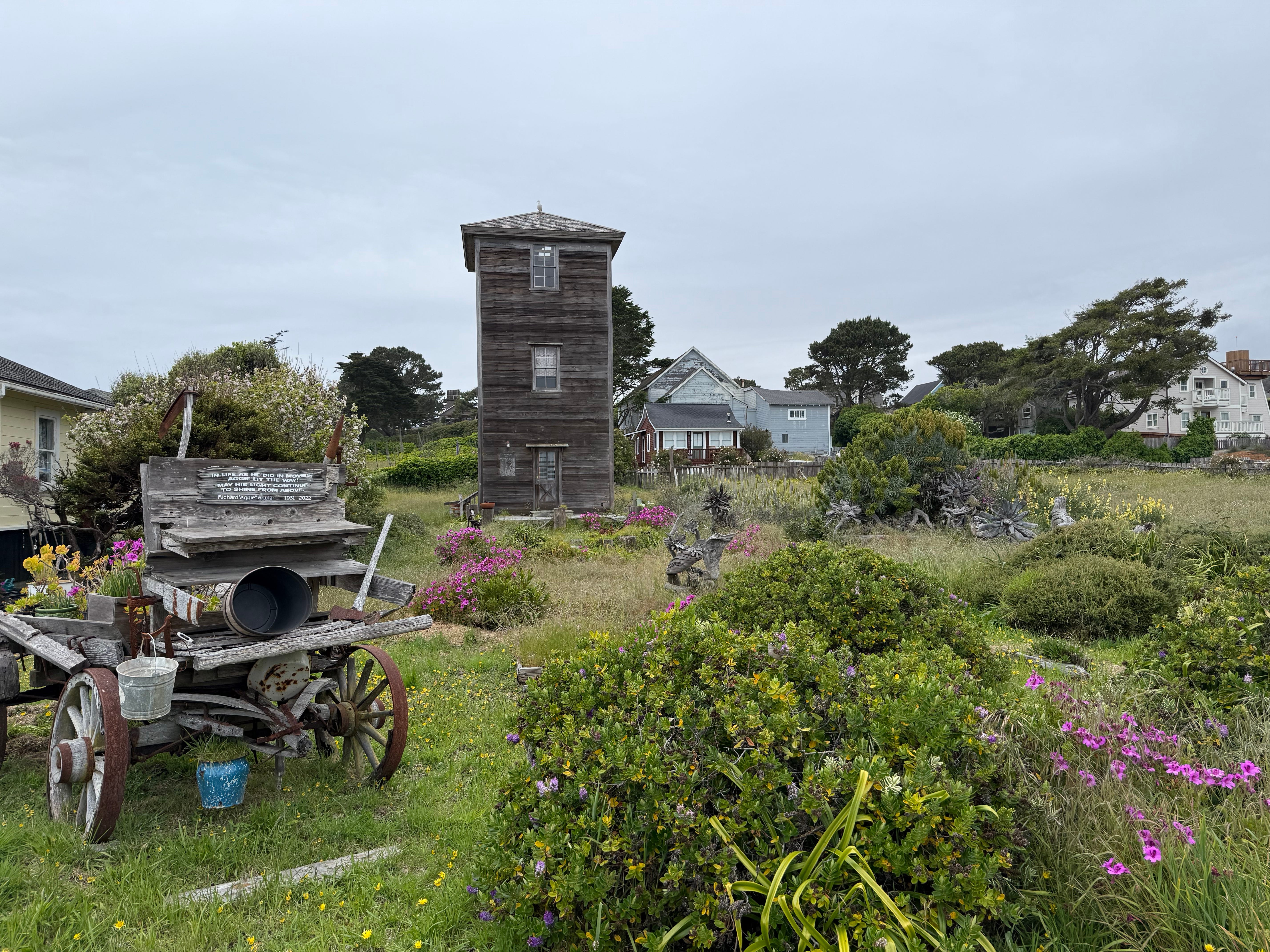
Maybe it had to be this way. Most of the attractions in this high-priced village were hosted in original buildings that were overflowing with character. It was a joy to walk among them, considering how much work and wealth went into keeping them preserved. Most of the landmarks in the village, including the awe-inspiring Presbyterian church, are worth holding onto for as long as possible. I imagine there are citizens who have lived in Mendocino since they purchased the land for next to nothing. Now, the costs were rising. Population is starting to dip, and tourism is increasingly important. The village has to import its drinking water by truck, mainly due to an aquifer failure in 2021. It is a town holding onto a dying spirit by any means necessary. Even if that means repulsing and rejecting someone like me.
So, to anyone looking at Mendocino as a great escape, you will find it if you have the means to afford it. For me, I was eager to leave the town behind to seek my counterculture elsewhere. I’ll spend the rest of the trip searching for my own hollowed out town that would be worthy of a rebuild. There are thousands of them all across this nation, desperate for new energy, sweat and vision. With the village in my rear-view mirror, I was struck with the thought that more of us should consider starting something new, rather than overspend for a piece of the wreckage left by a previous generation’s reclamation project.